
Operating Unit Governance Under Silent Executive Directives
Operating units under silent executive directives construct implicit governance limits until stated terms replace unwritten expectations with explicit risk allocations.

Wall
An operating unit lead submits a quarterly expansion budget for forty percent growth, receives no written response for six weeks, yet finds the funding deposited into the unit account without signature or memorandum. The absence of explicit commentary leaves the unit in structural ambiguity. Executive silence alters operational risk.
The operating lead assumes that capital deployment implies strategic alignment, yet no document protects the unit if market conditions shift and executive leadership disavows the expansion. Executive silence is an operational choice. Omission functions as explicit governance, transferring accountability downward while keeping strategic flexibility at the top.
Organizational research into the psychological contract demonstrates that unstated expectations create rigid operational obligations long before formal policies arrive. When executive directives remain implicit, operating leads rely on secondary signals: verbal offhand remarks, altered resource allocations, or delayed project approvals. The unit constructs an informal governance framework based on perceived intent.
This unwritten understanding functions smoothly during period stability, but breaks when strategic trade-offs require top-level protection. Without written terms, the operating unit bears full liability for executive intent that was never formally stated.
An unwritten executive instruction shifts the financial risk of failure entirely onto the operating lead who acts upon it.
The boundary between executive intent and unit execution becomes vulnerable when silence is treated as approval. Operating leads frequently misinterpret non-interference as endorsement. When executive authority refrains from issuing written mandates, it creates a structural moat around executive responsibility.
The unit absorbs the cost. When an unstated expectation goes unfulfilled, executive authority evaluates the outcome as a performance failure rather than a mandate failure. The unit operates inside a room where the walls move continuously, defined by invisible parameters that only become visible after an operational breach occurs.

Unstated Mandates and Structural Ambiguity
Structural ambiguity arises when operational targets are communicated through informal channels while performance metrics remain formal. Executive leadership may verbally encourage aggressive market entry while withholding written approval for the necessary compliance budget. This split stance forces the operating lead to select between operational paralysis and unauthorized execution.
Choosing execution creates immediate risk; choosing paralysis creates perceived incompetence. Ambiguity creates operational friction. The unit sits between two structural fires, accountable for outcomes while lacking written terms of authority.

The Psychological Contract in Executive Silence
The unstated terms between an executive and an operating lead function as a covert contract. The executive expects intuitive alignment with strategic priorities that change without written notification. The operating lead expects implicit protection in exchange for operational autonomy.
When market pressures force a change in strategy, the executive relies on the absence of written terms to disavow the unit’s direction. The covert contract bills the unit for clarity it never requested in writing. The psychological contract breaks, leaving the unit with depleted resources and compromised authority.
The operating unit that interprets executive silence as absolute authorization incurs structural liability whenever strategic priorities pivot without documentation.

Channel
Executive influence travels through structural channels that operate without written policy. Budget adjustments, hiring freezes, and approval delays serve as precise signals of executive desire. Capital flow reveals true priority.
When an executive ignores a formal written proposal while approving adjacent operational funding, the selective allocation acts as a directive. The operating unit does not require a written memo to read the resource vector. The risk lies in the lack of documentation, which allows executive leadership to redefine the goal post after the operational unit spends its annual capacity.
Indirect influence shifts the burden of policy creation onto middle management. Operating leads write unit-level rules to operationalize perceived executive preferences. These local rules lack enterprise authority and fail during cross-functional disputes.
When two operating units collide over resource priority, neither can produce an executive document to validate its claim. The executive maintains oversight by remaining the sole arbiter of unresolved conflicts, forcing operating leads to continually seek informal validation. This dynamic consumes leadership bandwidth and slows execution across all operational lines.

Vectors of Indirect Executive Influence
Silent directives migrate through four distinct operational vectors inside complex organizations. Each vector alters unit behavior without leaving a formal audit trail. Executive silence shifts accountability downward.
- Resource Throttling Withholding capital allocations for approved initiatives to force an operating unit to abandon a strategic direction without issuing an explicit cancellation order.
- Selective Omission Omitting specific operational units from executive strategy reviews, signaling reduced corporate alignment while maintaining formal reporting lines.
- Retroactive Interpretation Evaluating operating unit performance against unwritten standards introduced only after the operational cycle concludes.
- Approval Deceleration Delaying sign-off on operational proposals until market windows close, achieving project termination without formal executive rejection.
Stating an explicit operational limit within a capital request forces executive authority to ratify scope or accept delay.

Capital Allocation as Silent Policy
Capital distribution is the most direct channel of implicit executive governance. Written strategy documents carry little weight when capital allocation contradicts published objectives. An operating unit instructed to prioritize software stability that receives budget only for new feature development understands the true mandate.
Stated terms clarify operational scope. The unit lead must govern according to capital reality rather than public strategy. Operating under capital vectors requires constant recalibration of team output against actual funding limits.
Executive leadership expected the unit lead to read the standard room guidance and adjust spending without demanding a signed document.
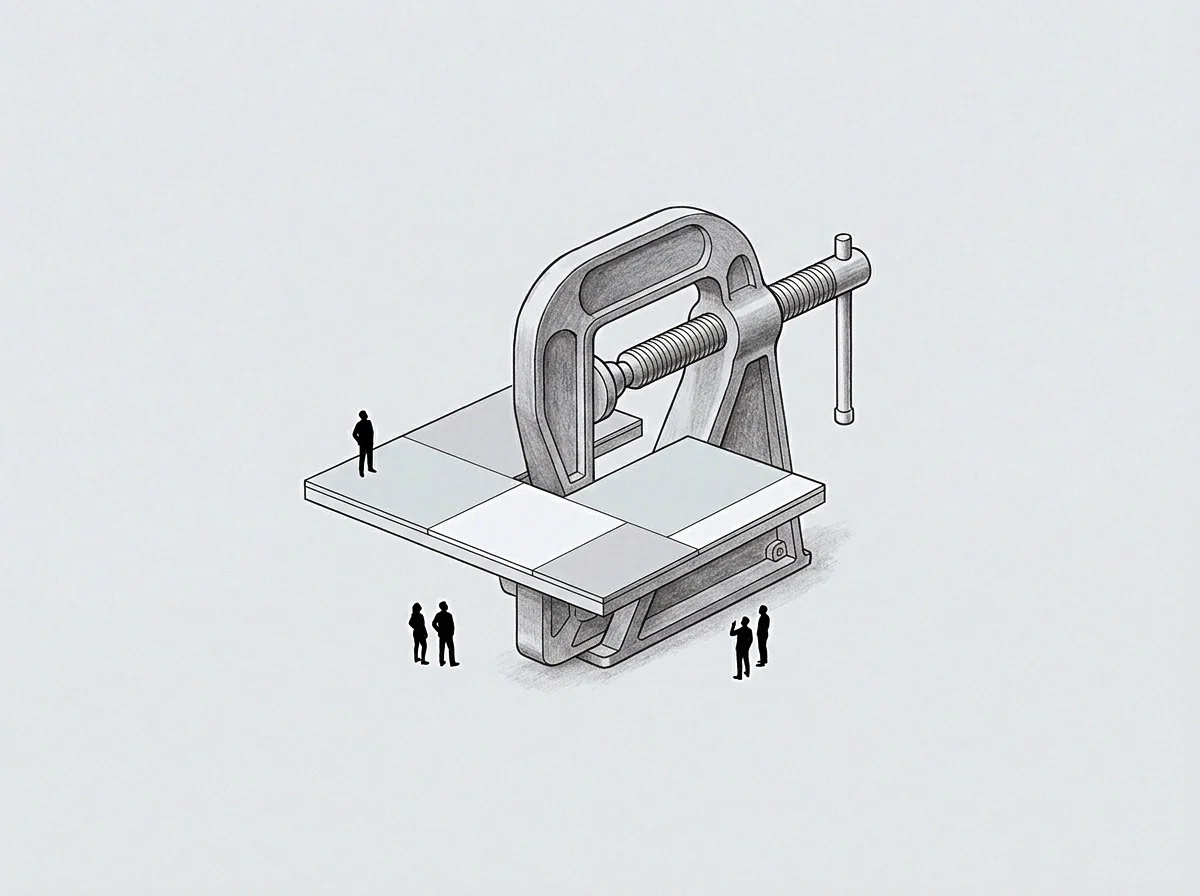
Friction
When operating units govern themselves under silent executive directives, internal friction increases proportionally with strategic uncertainty. Operating leads spend excessive hours attempting to decode executive posture instead of executing core operations. Written limits protect unit capacity.
The governance capacity of the unit degrades as managers substitute political interpretation for operational metrics. Conflict emerges within the unit as team members debate the true intent of unwritten executive instructions, dividing capacity between strategic alignment and operational survival.

How Does Executive Silence Shape Operating Limits?
Executive silence restricts operating limits by introducing unquantifiable downside risk. When an operating lead acts without explicit written authorization, every operational decision carries personal career risk. The lead narrows unit scope to decisions that offer immediate, defensive defensibility.
Innovation decelerates because unwritten directives provide no legal or corporate cover for failure. The unit defaults to conservative execution, avoiding high-yield strategic moves that lack written executive endorsement. The operating ceiling lowers automatically to match the level of documented authority.
Units operating without written mandates spend 34 percent of leadership capacity managing ambiguous scope approvals.
To understand the structural divergence in unit execution under silent executive leadership, consider the differences between implicit adaptation and explicit term construction across standard corporate operational parameters.
| Governance Dimension | Implicit Adaptation Model | Explicit Term Construction Model |
|---|---|---|
| Resource Allocation | Adjusts operations dynamically to match unwritten funding cues. | Locks operational capacity to written allocation agreements. |
| Escalation Trigger | Escalates only when operational failure becomes imminent. | Escalates immediately upon encountering unwritten scope shifts. |
| Performance Measure | Evaluated against unstated, retroactively applied executive expectations. | Evaluated exclusively against documented, pre-agreed metrics. |
| Operational Risk Floor | Absorbs strategic failure risk within the operating unit layer. | Transfers strategic failure risk back to executive authority. |

Operational Drift and Unstated Expectations
Operational drift occurs when an operating unit slowly alters its core mission to align with perceived executive preferences over time. The drift is subtle, taking place across multiple budget cycles and informal reviews. Without a baseline term established early, the unit loses its original strategic efficiency.
Term construction replaces boundary defense. The operating lead discovers after two years that the unit is executing a strategy fundamentally different from its original charter, without a single written order documenting the transition. The cost of this drift is measured in wasted resources and fragmented unit identity.
A written scope term requiring executive sign-off within five business days converts ambiguous silence into formal project rejection.
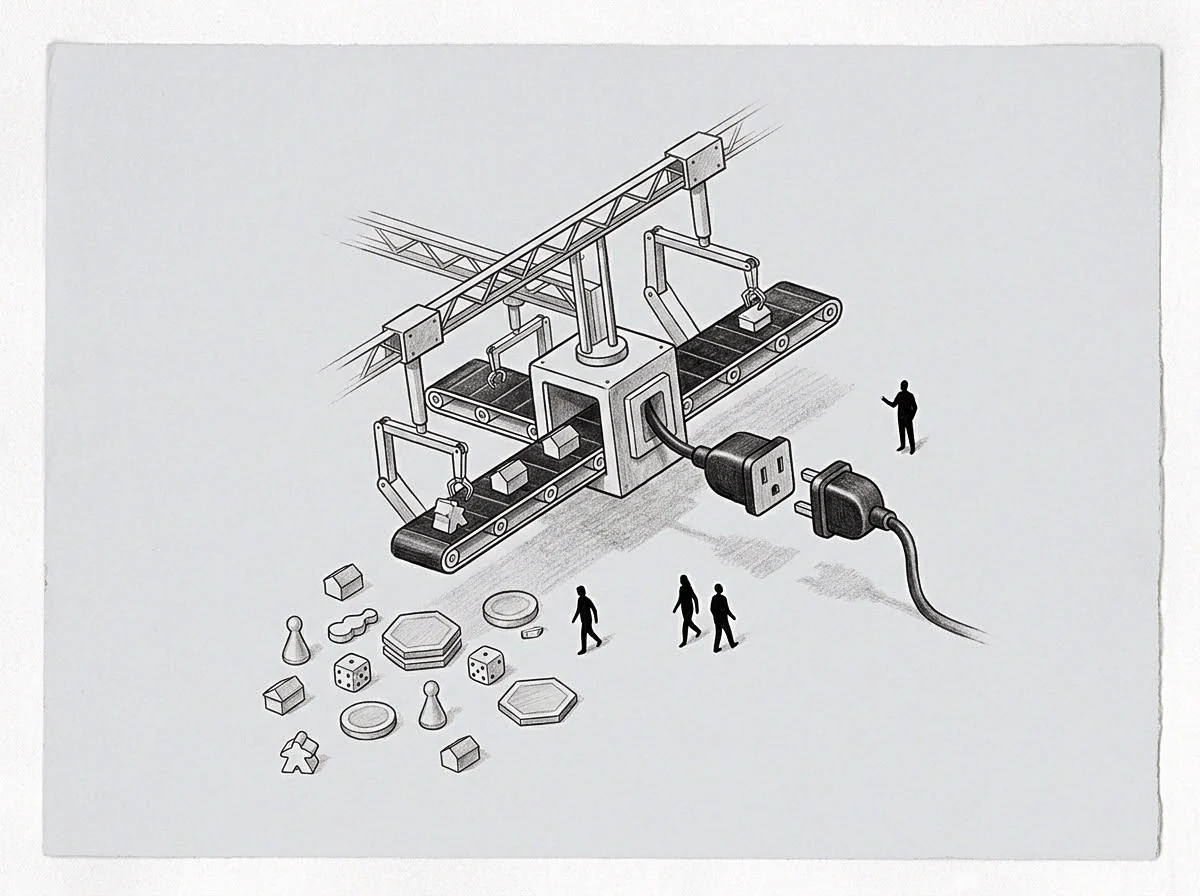
Term
The solution to silent executive governance is the rigorous construction of explicit operational terms. A term is a constructed design decision stated once, clearly, and early, defining the parameters of operation before resources are deployed. A term differs fundamentally from a boundary.
A boundary is an intangible limit that requires continuous emotional defense and daily maintenance. A term is a clear operational contract that filters out unstated expectations before work begins. The seat defines the duty.
Establishing terms allows the operating unit to secure structural clarity even when executive leadership prefers silence.
Constructing a term requires the operating lead to articulate the unstated assumption directly to executive authority. When an executive issues an ambiguous directive, the operating lead responds with a precise written interpretation, specifying that execution will proceed under those explicit parameters unless counter-instructions arrive by a specific date. The response provides immediate data.
Silence from the executive following a written clarification operates as formal consent under stated terms. This simple operational move converts passive executive silence into active regulatory authorization.
When an operating lead defines decision authority before deploying funds, implicit executive expectations lose their capacity to retroactively alter unit scope.

Constructing Terms Before Cost Accrues
Terms must be established before capital, time, and capacity are spent. Once an operating unit invests capacity into an ambiguous project, its bargaining leverage evaporates. Stating terms early forces the executive to confront the structural trade-offs of the mandate.
If the executive rejects the written term, the unit saves its resources; if the executive accepts the term, the unit gains explicit operational cover. Explicit terms eliminate hidden liability. The cost of stating a term early is a single awkward conversation; the cost of omitting a term is months of uncompensated operational exposure.

The Sequence of Governance Conversion
Converting implicit executive directives into formal operational terms requires a disciplined four-stage sequence. This sequence moves the operating unit from passive exposure to documented authorization.
- Identify the unstated executive expectation embedded within informal communications or resource shifts.
- Translate the implicit expectation into a precise written operational term defining scope, budget, and liability.
- Submit the written term to executive authority with a defined time window for explicit rejection or modification.
- Log the absence of executive objection as formal operational ratification and execute exclusively within the written parameters.
Stating an operational limit once during resource allocation prevents endless negotiations during execution.

Line
Establishing clear governance lines under silent executive directives determines whether an operating unit retains long-term strategic viability. Autonomous units inside corporate structures operate much like specialized mechanical sub-assemblies in large engineering plants, where clear interface tolerances prevent systemic friction across operating thresholds. When the line between executive oversight and unit autonomy is documented, the unit operates with speed and predictability.
Unstated expectations generate structural conflict. When that line remains blurry, the unit dissipates its strength managing internal corporate friction rather than external market competition.

Residual Tension in Autonomous Governance
Even with clear terms established, a structural tension remains between executive desire for flexibility and unit requirement for stability. Executive authority naturally resists written terms because documentation limits strategic maneuvering room. The operating lead must maintain the discipline of terms despite subtle executive pushback.
This tension is not a failure of governance; it is the natural state of organizational life. The objective is not to eliminate tension, but to manage it through explicit terms rather than implicit fear.

Stance and Structural Authority
The final position of the operating lead rests on professional stance rather than political compliance. Structural authority is built through consistent operational discipline and precise communication. By treating executive silence as a condition to be managed through explicit terms rather than an unwritten law to be feared, the lead establishes a stable operational perimeter.
The unit gains the clarity required to perform, protecting its team, its capital, and its strategic mission from the chaos of undocumented corporate pivots.
Whether executive leadership permits operating units to establish permanent written protocols without viewing those explicit terms as an infringement on executive discretion remains an open structural tension.