
Evaluating Psychological Contract Violation Rates When Written Directives Change Covertly
Unannounced updates to written directives trigger high psychological contract violation rates by encouraging workers to attribute changes to managerial opportunism.

Paper
An operator reviews a shared document repository on a Tuesday morning and discovers a subtle modification in the operational handbook updated three weeks prior without an announcement. The revised passage alters project approval criteria and shifts reporting timelines. No email accompanied the commit, no meeting addressed the revision, and no formal record explained the context.
Written terms carry weight. The operator compares the newly altered text against an unwritten understanding forged during founding discussions. The physical document on the screen has shifted, and with it, the baseline of the working relationship.

Operational Directives in Shared Repositories
Internal documentation functions as a structural reference point inside growing organizations. When policies sit in shared folders, participants treat written directives as stable expressions of organizational intent. Written directives establish explicit rules governing equity allocation, remote work options, expense reimbursements, and decision rights.
The WRITTEN DIRECTIVE serves as a formal contract element, yet its underlying meaning is anchored to unwritten expectations surrounding its creation.
When leadership alters these files without public notice, the physical act of modification alters more than administrative text. Discovery replaces announcement. The operator who stumbles upon an altered memo experiences a sudden shift in cognitive framing.
What was previously accepted as a shared standard transforms into an administrative instrument controlled by one party.
A written policy update made without an announcement shifts the burden of discovery onto the person carrying out the work.

Implicit Commitments versus Stated Policy
Unspoken expectations govern how workers interpret formal agreements. Organizational researchers define the PSYCHOLOGICAL CONTRACT as an individual’s belief regarding the mutual obligations existing between themselves and the organization. These beliefs stem from verbal promises, observed culture, and early negotiations.
While a written directive represents an explicit contract component, the psychological contract fills every gap between written lines.
A covert directive change directly impacts this implicit structure. When an executive alters a written directive covertly, the employee evaluates the act not merely as a text revision, but as a breach of reciprocal goodwill. Silence signals intent.
The observer concludes that management sought the benefit of a policy change while intentionally avoiding the social friction of an open conversation.
A thirty-day notification clause for directive changes preserves the initial agreement until both parties explicitly sign the amended text.

Drift
Leadership teams alter administrative guidelines for technical reasons, risk mitigation, or operational speed. The decision to upload a revised policy without circulating an explanatory note often appears efficient to the person making the edit. Context dictates the fallout.
To the person affected by the policy change, the lack of announcement transforms a routine policy tweak into a relational signal.

Structural Drivers of Unannounced Modifications
Executives frequently modify written protocols to mitigate emerging liability or standardize procedures across expanding departments. These edits occur across several distinct operational patterns:
- THE ASYMMETRIC REVISION occurs when management updates performance criteria or deliverables in official records without consulting the team members responsible for execution.
- THE AUDIT RETROFIT involves rewriting historical policy guidelines to align written records with recent compliance failures or budget overruns.
- THE AMBIGUITY PRESERVATION happens when clear written commitments are replaced with flexible language that grants executive discretion over future resource distributions.
Each pattern creates a specific form of relational friction. When written clarity degrades into discretionary ambiguity, workers lose the ability to forecast rewards and performance standards accurately.
Covert adjustments to written documentation convert passive trust into active monitoring when the change impacts resource allocations.

Does Silent Revision Alter Reciprocal Commitments?
Organizational research draws a sharp distinction between psychological contract breach and psychological contract violation. A contract breach is the cognitive recognition that an organization has failed to fulfill one or more obligations. A contract violation is the emotional reaction, characterized by anger, betrayal, and distress, that follows that recognition.
The transition from breach to violation depends entirely on how the individual explains the organization’s actions.
Silent revisions accelerate this transition dramatically. When a policy shift occurs through open debate, employees attribute the change to external pressures, financial realities, or strategic realignments. When the same policy shift occurs through silent edits, workers attribute the change to deliberate deceit.
Attribution drives the reaction. The covert nature of the update serves as empirical proof of opportunism.
The revised text was uploaded to the shared folder weeks ago, so the project terms were updated long before the milestone arrived.

Signal
When an administrative document changes without warning, affected personnel engage in systematic sense-making. The discovery of an unannounced update sets off a multi-stage cognitive evaluation process that alters workplace behavior. The change creates friction.
Understanding this internal evaluation sequence clarifies why minor text alterations frequently trigger disproportionate operational disruption.

Cognitive Evaluation of Directive Alterations
Operators process written changes through a multi-stage mental framework before taking overt action. This evaluation progresses through five concrete phases:
- Initial observation of text discrepancies during routine execution.
- Verification of version control history to establish timeline and intentionality.
- Comparison of written alterations against previous verbal commitments.
- Calculation of personal operational loss or equity dilution.
- Formulation of relational position based on perceived managerial integrity.
The progression moves from passive observation to active re-evaluation of the entire employment arrangement. Once an individual reaches the fifth stage, the original psychological contract is destroyed.
A covert directive change reduces discretionary effort across an organization far faster than a publicly negotiated pay reduction.

Attribution Theory and Perceived Intentionality
Organizational psychologists observe that workers seek causes for unexplained changes in their environment. When evaluating a covert directive edit, employees weigh two primary explanations: organizational incompetence or managerial reneging. Incompetence implies that leadership forgot to circulate the memo.
Reneging implies that leadership willingly broke a commitment.
Silent updates systematically lean the employee’s attribution toward reneging. The presence of a polished, edited document proves that leadership possessed the time and resources to revise the text. The absent step was public communication.
Employees infer that management prioritized personal comfort or administrative control over transparency. Trust degrades quickly.

Behavioral Consequences of Contract Violation
Perceived betrayal alters how individuals participate in collective tasks. High violation rates manifest in predictable behavioral shifts across departments:
THE VOICE WITHDRAWAL occurs when experienced staff cease offering proactive feedback or strategic suggestions during planning sessions.
THE LITERAL COMPLIANCE phase features workers strictly executing written job descriptions while abandoning all unbilled extra-role contributions.
THE PREEMPTIVE EXIT materializes as top-performing talent quietly initiates external job searches while maintaining surface-level productivity.
The organizational cost of these behavioral shifts far exceeds the administrative savings gained by quietly modifying policies. The loss of discretionary effort cripples execution velocity across teams.
Unannounced revisions to written directives convert high-performing operators into passive observers who measure output strictly against contractual minimums.

Scale
Organizations update operational instructions through several distinct channels, ranging from transparent team negotiations to completely silent file overwrites. The chosen delivery method directly dictates the psychological contract violation rate observed across affected personnel.

Comparative Analysis of Directive Modification Styles
Data from workplace studies reveals stark differences in worker retention, perceived integrity, and violation rates depending on how policy shifts are communicated. The structural impact of each method is evaluated below.
| Modification Method | Detection Pattern | Perceived Intentionality | Average Violation Rate | Retention Impact |
|---|---|---|---|---|
| Overt Negotiated Revision | Immediate formal notice | Low opportunistic bias | 12 percent | Minimal voluntary turnover |
| Overt Mandated Shift | Broadcast memo | Moderate structural bias | 38 percent | Moderate voice and bargaining |
| Covert Silent Retrofit | Accidental discovery | High opportunistic bias | 84 percent | Severe exit and effort reduction |
The table demonstrates that silent modifications yield an 84 percent violation rate among personnel. The operational consequences of this approach are severely negative compared to overt mandates or negotiated revisions.

Empirical Measurement of Violation Intensity
Quantifying emotional disruption requires tracking changes in discretionary participation following document alterations. When management modifies compensation directives, intellectual property terms, or promotion criteria without warning, the violation intensity reaches maximum levels. The original agreement stands.
In contrast, minor operational adjustments to meeting software or travel expense filing templates generate lower violation rates, provided the core economic deal remains intact.
Executive teams often misjudge this distinction, treating equity vesting schedules or decision-making authorities as simple administrative details. When core economic or autonomy terms change covertly, psychological contract violation is virtually guaranteed.
The exact threshold where an unannounced administrative edit converts from a minor clerical nuisance into a career-ending breach remains unmeasured across early stage technology firms.

Position
Constructing explicit guidelines around documentation updates prevents operational breakdown. Organizations that rely on unannounced revisions eventually pay for administrative convenience through lost talent, degraded trust, and workplace friction. Revising text carries consequences.
Managing directives demands absolute clarity around how updates are introduced, evaluated, and executed.
Constructing Terms Before Cost Accrues
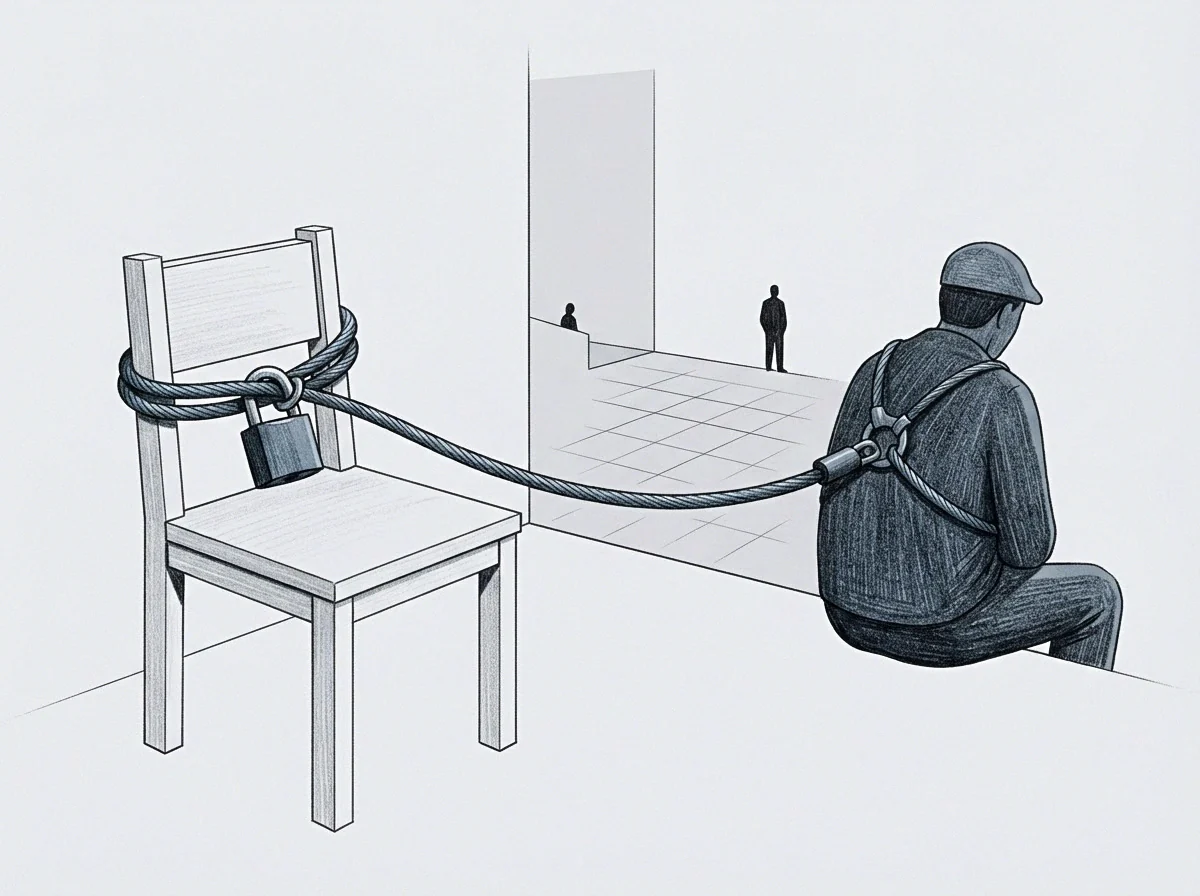
Setting rules for document updates eliminates silent revisions. Founders and operators must replace vague assumptions regarding administrative updates with explicit operational terms. A clear term specifies how updates occur, who receives notification, and what grace period applies before changes take effect.
Tactics produce outcomes.
A founder states a clear update protocol during onboarding. The protocol declares that no policy change takes effect without a public changelog entry and a seven-day review window. This single term eliminates the possibility of covert revisions while protecting managerial adaptability.
A directive modified in public builds alignment while a directive altered in secret forfeits authority.

The Sequence of Stated Directives
Effective governance follows a clear progression from personal desires to written agreements. First, leadership identifies a operational want. Next, leadership constructs an explicit term governing that want.
Third, leadership states the cost associated with enforcing or modifying that term. Fourth, leadership takes a firm position. Finally, action follows position.
The cost remains high.
When written directives must change, management presents the revised text openly, states the operational rationale, and addresses the psychological contract directly. The response reveals intent. Addressing the shift in public preserves organizational integrity, maintains high discretionary effort, and keeps psychological contract violation rates at manageable levels.
Stating the update policy early costs one uncomfortable conversation, while altering directives silently costs the entire working arrangement.