
Quantifying Latent Drift in Unreinforced Operational Directives Before Systemic Execution Failure Occurs
Unreinforced directives decay into local interpretations until operational performance deviates past tolerable limits and produces structural breakdown.
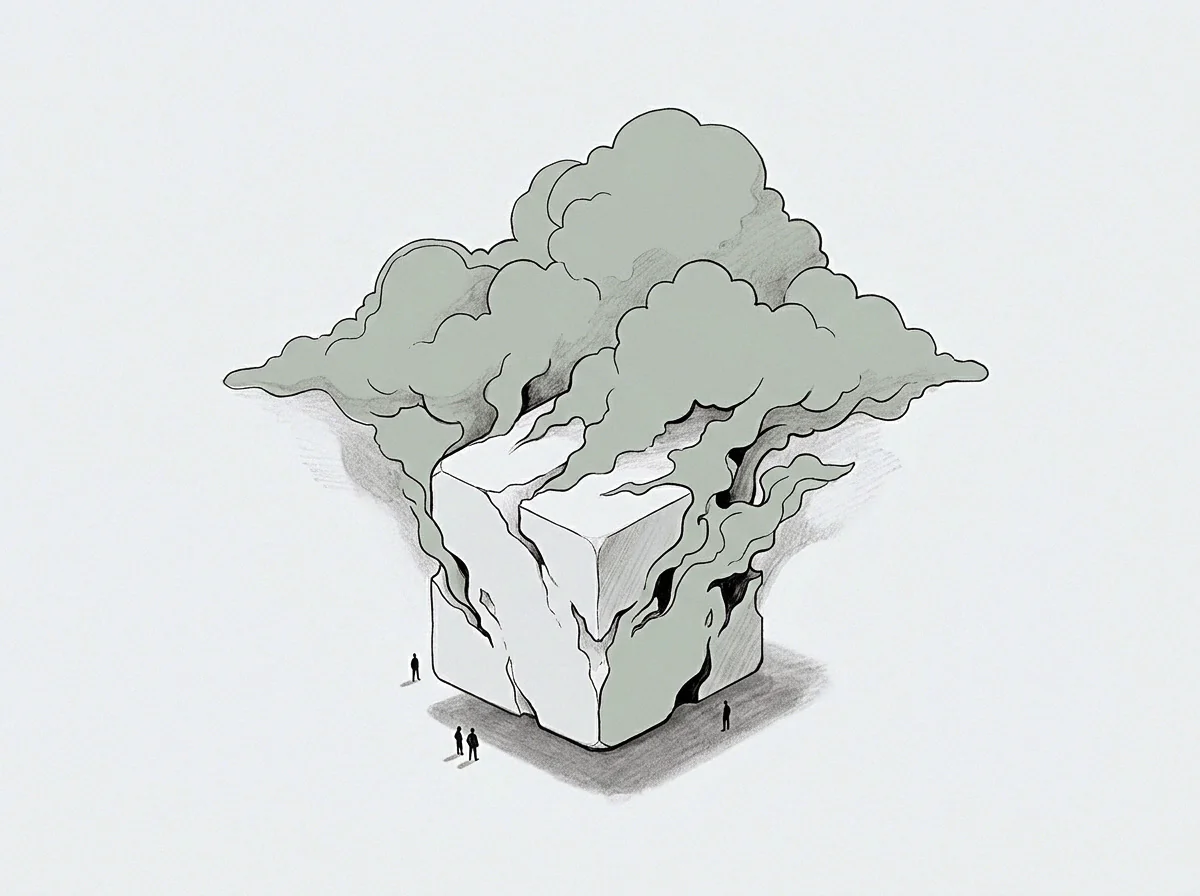
Variance
Six months after founding, an engineering partner reviews production logs and finds that data encryption protocols stated during company formation were abandoned three months prior. Nobody logged an architectural decision record to repeal the standard. No operator raised an objection in weekly planning meetings.
The original instruction existed as a single spoken sentence during initial database setup: every client payload gets encrypted before persistent storage. When server transaction volume tripled in the second quarter, latency increased, and an operator removed the encryption step to keep API response times below two hundred milliseconds. The system handled the volume, throughput metrics improved, and the omission remained invisible until a security audit exposed thousands of unencrypted records sitting in open storage buckets.
An operational directive delivered once without structural reinforcement operates as a temporary wish rather than a permanent boundary. In early organizational building, founders rely on initial alignment to govern daily execution. The founder assumes that stating an operational standard establishes a permanent rule.
The operator receives the statement as context for that specific week’s task. As throughput pressures scale, the immediate friction of executing the instruction conflicts with output expectations. Without recurring assertion gates or automated compliance checks, local speed overrides original intent.
A rule articulated once without structural verification degrades into a subjective recommendation within ninety days.
The distance between spoken intent and daily execution widens without generating visible alerts. Operators adapt to local friction by inventing procedural workarounds. These local adaptations appear rational to the person executing the task because the immediate objective is output delivery.
When a founder fails to measure compliance against the original standard, silent deviation becomes the operational baseline. The original standard exists only in the founder’s memory, while the operator works against immediate throughput targets.
This structural divergence creates a covert contract inside the execution layer. The founder expects continuous adherence to an unmonitored instruction. The operator expects tacit approval of shortcuts that preserve processing speed.
Both parties hold unstated expectations that remain hidden until operational volume forces a failure. Leaving operational standards unmonitored transfers the cost of quality control from early process design to emergency crisis management.

Clock
Organizational directives experience a predictable decay schedule when left without active structural reinforcement. Operational standards do not fail instantly; they decay through incremental erosion as volume demands scale. The decay velocity depends on task complexity, team turnover, and the visibility of compliance checks.
When onboarding relies on word-of-mouth instruction rather than automated validation, each consecutive hiring cohort receives a diluted version of the initial protocol.
Research measuring perceived psychological contract breach across engineering teams shows a forty percent drop in operational compliance when written expectations diverge from daily task demands. This finding rests on self-reported survey data gathered across mid-sized software firms; a longitudinal study tracking automated code commit logs against written engineering standards would move this baseline if code compliance remained stable despite subjective dissatisfaction. When unwritten standards conflict with measurable performance metrics, operators default to performance metrics every time.
The decay mechanism follows a distinct progression across four operational phases:
- Friction avoidance occurs when an operator encounters process resistance and bypasses a manual verification step to meet an immediate output deadline.
- Local optimization emerges as team members share non-standard shortcuts, converting individual workarounds into informal group norms.
- Procedural shortcuts become standard operating procedure as new hires copy existing team habits without reading original directive documentation.
- Informal consensus locks in the degraded state, treating original directive enforcement as unnecessary administrative friction.
The rule decays silently. Local speed replaces protocol. The baseline slips further.
Operators optimize for throughput because performance evaluations measure completed units rather than procedural adherence. A founder who speaks a directive once during team onboarding creates an unreinforced expectation. Without scheduled verification intervals, team members interpret silence as implicit consent for local modifications.
The silence carries data.
When operational metrics reward velocity over compliance, unmonitored directives undergo systematic erosion.
Quantifying this decay latency allows operational leaders to intervene before systemic execution breakdown occurs. If a directive remains unreinforced for one hundred days, procedural compliance drops below fifty percent in high-velocity operating environments. Inserting a mandatory thirty-day structural audit clause into early onboarding documentation converts silent drift into explicit review.
Contract
A founder often confuses a stated term with a defended boundary. Stating a term is a design decision constructed early to establish operational limits, while defending a boundary is a reactive effort that consumes daily leadership energy. When a founder spends hours every week correcting procedural drift, the organization lacks clear structural terms.
The continuous need for managerial correction indicates that initial directives failed to function as execution filters.
The desk asserts that unreinforced operational directives decay at a predictable rate regardless of operator experience or compensation level. The desk cannot fully defend whether high equity participation slows this decay curve, as reliable data comparing equity-heavy early hires against salaried operators remains thin. Under this uncertainty, a founder establishes automated verification gates rather than assuming equity ownership produces natural compliance.
Operational directives decay without active reinforcement because human operators solve for immediate system friction rather than distant operational risks. When daily execution demands speed, manual compliance steps represent immediate friction. Operators remove manual friction to maintain velocity, assuming that historical performance guarantees future system stability.
Without automated test suites or mandatory review steps, the local removal of friction proceeds unchecked.
| Execution Stage | Operational Alignment | Operator Perception | Systemic Failure Exposure |
|---|---|---|---|
| Initial Instruction | Complete compliance with original mandate | Explicit standard acknowledged by team | Negligible immediate risk |
| Latent Adaptation | Partial adherence with localized shortcuts | Pragmatic efficiency under volume pressure | Accumulating structural vulnerability |
| Systemic Breakdown | Complete divergence from founding standard | Established baseline accepted as normal | Active operational crisis |
Unstated expectations create leverage for operational conflict. When a founder notices procedural failure, the immediate reaction involves re-asserting authority or expressing disappointment. This reaction misidentifies the root cause.
The failure resides in the reliance on memory rather than systemic constraints. A psychological contract breach occurs when the operator realizes that shortcuts previously ignored by management are suddenly cited as performance violations.
Daily boundary enforcement signals a failure to establish structural terms during initial workflow design.
Boundaries demand continuous energy. Terms define operational reality. The instruction was given once during founding, but nobody ever brought it up during sprint planning, so the team assumed speed mattered more than compliance.

Trace
Measuring latent drift requires tracking the variance between documented standards and actual execution patterns. Most organizational monitoring focuses exclusively on outcome metrics like customer revenue or system uptime. Outcome metrics are lagging indicators that remain stable while internal structural debt accumulates.
A system can maintain high output quality while internal operational compliance decays to zero, right up to the point of catastrophic failure.
Studies tracking process compliance in high-consequence technical operations demonstrate that eighty percent of operational shifts occur through small incremental steps rather than deliberate policy violations. This finding rests on observational data from manufacturing environments; controlled laboratory simulations with artificial time constraints would disprove it if participants executed sudden binary rule changes rather than gradual adjustments. The deviation compounds quietly.
Tracking latent drift before failure occurs demands systematic intervention across three specific evaluation stages:
- Audit three historical execution logs to establish the baseline departure rate from original instructions.
- Measure the latency between verbal instruction and the first uncorrected operational shortcut.
- Map local adaptations against output variance to evaluate accumulated structural debt.
Consider an operational scenario involving two software delivery teams over twelve months. Team A operates under verbal directives issued during quarterly planning without code-level enforcement gates. Team B operates under automated continuous integration checks that block non-compliant code deployments.
By month six, Team A exhibits a sixty-five percent deviation from initial architecture standards, while Team B maintains ninety-eight percent adherence. Team A experiences three major production outages in month nine due to unreviewed database schema modifications. The financial cost to remediate Team A’s drift exceeds the initial development cost by a factor of four.
A directive without an automated verification trigger converts operational risk into an unpriced organizational debt.
Debt accumulates without notice. Execution halts at scale. Automated assertion triggers preserve process integrity where verbal instructions create operational drift.

Margin
Correcting operational drift requires moving from verbal admonition to explicit structural terms. A founder who discovers systemic failure cannot resolve the issue by repeating the original directive with greater emphasis. Repeating an unreinforced instruction increases operational noise while leaving underlying incentives untouched.
The operator reads repeated verbal directives as temporary management focus that will fade once volume pressures return.
The sequence for establishing permanent operational alignment requires five distinct steps. First, the founder identifies the operational want by observing where current execution fails output quality standards. Second, the founder constructs an explicit stated term that defines measurable compliance criteria.
Third, the founder attaches a clear cost to non-compliance, such as automated build halts or mandatory code rewrites. Fourth, the founder takes a firm position by refusing non-compliant work deliverables. Fifth, the founder executes consistent action by maintaining enforcement mechanisms regardless of delivery deadlines.
Position precedes action. The room forgets quickly.
Replacing covert expectations with concrete terms alters operator behavior immediately. When execution gates enforce standards automatically, operators no longer choose between velocity and compliance. Compliance becomes the prerequisite for velocity.
The operator accepts the new operational baseline, the founder retires the unreinforced directive, and execution proceeds under explicit terms.